

 Listen to this article
Can the PNB MetLife 360 Health Saving Plan truly help you prepare for future healthcare expenses while growing your wealth, or does it come with important trade-offs?
Does the PNB MetLife 360 Health Saving Plan offer the right balance between health-focused savings and market-linked growth, or are there better alternatives available?
Is the PNB MetLife 360 Health Saving Plan a smart way to plan for healthcare costs, or would keeping health insurance and investments separate offer greater flexibility?
Let us examine how these benefits work and evaluate the plan’s key features, advantages, and drawbacks to understand whether it is a suitable choice.
Table of Contents:
What is the PNB MetLife 360 Health Saving Plan?
What are the features of the PNB MetLife 360 Health Saving Plan?
Who is eligible for the PNB MetLife 360 Health Saving Plan?
What are the benefits of the PNB MetLife 360 Health Saving Plan?
Accidental Total and Permanent Disability (ATPD) Benefit
Accidental Death Benefit (ADB)
What are the investment strategies and fund options of the PNB MetLife 360 Health Saving Plan?
What are the charges of the PNB MetLife 360 Health Saving Plan?
Grace Period, Discontinuance and Revival of the PNB MetLife 360 Health Saving Plan
Free Look Period for the PNB MetLife 360 Health Saving Plan
Surrendering the PNB MetLife 360 Health Saving Plan
What are the advantages of the PNB MetLife 360 Health Saving Plan?
What are the disadvantages of the PNB MetLife 360 Health Saving Plan?
Research Methodology of PNB MetLife 360 Health Saving Plan
Benefit Illustration – IRR Analysis of PNB MetLife 360 Health Saving Plan
PNB MetLife 360 Health Saving Plan Vs. Other Investment
PNB MetLife 360 Health Saving Plan Vs. Pure-term + Equity Mutual Fund
Final Verdict on PNB MetLife 360 Health Saving Plan
What is the PNB MetLife 360 Health Saving Plan?
PNB MetLife 360 Health Saving Plan is an individual, Unit–Linked, Non–Participating, Savings, Health Insurance Plan. It is a combination of Protection, Savings, and Market-linked growth -all in one comprehensive plan.
What are the features of the PNB MetLife 360 Health Saving Plan?
- Built-in Protection Benefits: Covers Accidental Total and Permanent Disability (ATPD), Accidental Death Benefit (ADB), and Non-Accidental Death Benefit.
- Family Coverage: Extends ATPD benefits to your spouse and up to three children under the Family Coverage option.
- Long-Term Wealth Creation: Build a corpus with policy maturity options up to age 80 or age 99.
- 360 Health Services: Access services designed to improve health and well-being awareness.
- Return of Premium Allocation Charges: Receive a return of premium allocation charges starting from the 11th policy year, subject to the plan’s terms and conditions.
- Choice of Investments: Choose from nine diversified funds based on your risk appetite and growth objectives.
- Tax Benefits: Premiums paid and benefits received may qualify for tax benefits, subject to prevailing tax laws and applicable conditions.
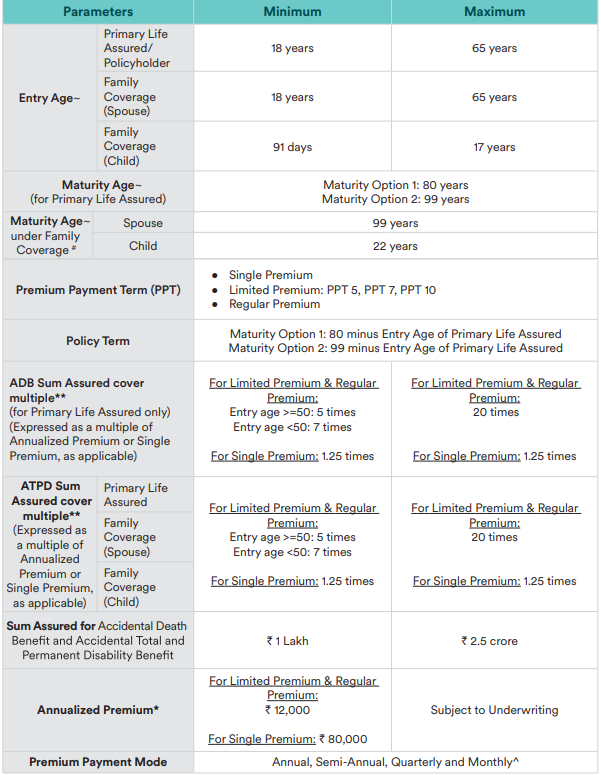
Who is eligible for the PNB MetLife 360 Health Saving Plan?
What are the benefits of the PNB MetLife 360 Health Saving Plan?
1. Accidental Total and Permanent Disability (ATPD) Benefit
In case of an unfortunate accident, a lump sum ATPD benefit is paid if the Primary Life Assured suffers total and permanent disability from any of the 11 listed disabilities, provided the disability develops within 180 days, and the PNB MetLife 360 Health Saving Plan Policy is in force as on the date of the accident.
Optional Benefit – Family Coverage: You can extend the Accidental Total and Permanent Disability (ATPD) Benefit to your loved ones by choosing the Family Coverage benefit.
2. Accidental Death Benefit (ADB)
In case of death of the Primary Life Assured due to an Accident, the following Accidental Death Benefit shall be paid out as a lump sum, provided the death occurs within 180 days from the Accident, and the PNB MetLife 360 Health Saving Plan policy is in In-force status as on the date of the accident.
ADB payable shall be the higher of:
- Fund Value (excluding Top-Up Fund Value, if any) as at the date of intimation of death of the Primary Life Assured; or
- ADB Sum Assured less all Partial Withdrawals (including Withdrawals under Smart Withdrawal Facility) made during the last two years immediately preceding the date of death of the Primary Life Assured; or
- 105% of the total premiums paid (excluding Top-Up premiums, if any) up to the date of death of the Primary Life Assured less all Partial Withdrawals (including Withdrawals under Smart Withdrawal Facility) made during the last two years immediately preceding the date of death of the Primary Life
In addition to the above, where Top -Up Premiums are paid, and in case of death of the Primary Life Assured, the company will pay the highest of the following amounts to the Claimant/Beneficiary, as may be applicable:
- Top-Up Fund Value as at the date of intimation of death of the Primary Life Assured; or
- Top-Up Sum Assured; or
- 105% of the total Top-Up Premiums paid up to the date of death of the Primary Life Assured
3. Non-Accidental Death Benefit
In case of death of the Primary Life Assured due to causes other than Accident, the Non-Accidental Death Benefit shall be paid out as a lump sum provided the PNB MetLife 360 Health Saving Plan Policy is in force, the higher of:
- Fund Value (excluding Top-Up Fund Value, if any) as at the date of intimation of death of the Primary Life Assured; or
- 105% of the total premiums paid (excluding Top-Up premiums, if any) up to the date of death of the Primary Life Assured less all Partial Withdrawals (including Withdrawals under Smart Withdrawal Facility) made during the last two years immediately preceding the date of death of the Primary Life Assured
In addition to the above, where Top -Up Premiums are paid, and in case of death of the Primary Life Assured, the company will pay the highest of the following amounts to the Claimant/Beneficiary, as may be applicable:
- Top-Up Fund Value as at the date of intimation of death of the Primary Life Assured; or
- 105% of the total Top-Up Premiums paid up to the date of death of the Primary Life Assured
4. Maturity Benefit
On survival of the Primary Life Assured till the end of the PNB MetLife 360 Health Saving Plan Policy Term, the company will pay a Maturity Benefit equal to the Total Fund Value in the Unit Account (including Top-Up Fund Value, if any) determined using the Net Asset Value on the maturity date.
Summary of benefits
| Primary Life Assured | Spouse | Up to 3 Dependent Children | |
| Accidental Total and Permanent Disability (ATPD) Benefit | Available (Individual ATPD Sum Assured) | Available (Individual ATPD Sum Assured) | Available (Individual ATPD Sum Assured) |
| Accidental Death Benefit (ADB) | Available | Not Applicable | Not Applicable |
| Non-Accidental Death Benefit | Available | Not Applicable | Not Applicable |
| Maturity Benefit | Available | Not Applicable | Not Applicable |
What are the investment strategies and fund options of the PNB MetLife 360 Health Saving Plan?
A. Self-Managed Strategy
You can manage your investments actively with this strategy. You can allocate your premiums directly amongst the available funds in proportions of your choice.
You have the option of switching amongst the funds as mentioned below and may choose the premium redirection option for your future premiums depending on your changing risk appetite and market conditions.
The details of the various funds are given in the table below:
| Asset Category | |||||
| S. No | Fund Name | Equities | Debt | Money Market | Risk Profile |
| 1 | Mid-cap fund | 60-100% | 0 | 0-40% | Very High Risk |
| 2 | Flexi cap fund | 60-100% | 0 | 0-40% | Very High Risk |
| 3 | Dividend Leaders Index Fund | 60-100% | 0 | 0-40% | Very High Risk |
| 4 | Multifactor Index Fund | 60-100% | 0 | 0-40% | Very High Risk |
| 5 | Enhanced Value Index Fund | 60-100% | 0 | 0-40% | Very High Risk |
| 6 | Sustainable Equity fund | 60-100% | 0 | 0-40% | High Risk |
| 7 | India Opportunities Fund | 60-100% | 0 | 0-40% | High Risk |
| 8 | Balanced Opportunities Fund | 40-75% | 25-60% | 0-35% | Medium Risk |
| 9 | Bond Opportunities Fund | 0 | 80-100% | 0-20% | Low Risk |
B. Systematic Transfer Strategy
The Systematic Transfer Strategy helps safeguard your wealth against market volatility and is available only if you have opted for a Regular Pay or Limited Pay policy with annual frequency as the premium payment mode.
This strategy ensures a gradual exposure to equity from debt in a phased manner through equal instalments over 12 months. All instalment premiums will be invested in the Protector II Fund (debt-oriented fund).
This amount will be systematically transferred to the Premier Multi-cap Fund (equity-oriented fund) over the 12-month Policy period.
At policy inception, your premium, net of allocation charge is distributed between two funds, Premier Multi-cap Fund (equity-oriented fund) and Protector II Fund (debt-oriented fund), based on your attained age.
As you move from one age band to another, your funds are redistributed based on your age. The age-wise portfolio distribution is shown in the table.
| Age of Policyholder (Years) | India Opportunities Fund | Bond Opportunities Fund |
| Up to 30 | 70% | 30% |
| 31 – 40 | 60% | 40% |
| 41 – 50 | 50% | 50% |
| 51 – 60 | 40% | 60% |
| 61 – 70 | 20% | 80% |
| 71+ | 10% | 90% |
What are the charges of the PNB MetLife 360 Health Saving Plan?
i. Mortality Charges
Mortality Charge will be deducted at the beginning of each Policy month by cancellation of an appropriate number of units at the corresponding Net Asset Value.
Mortality charge will be based on the attained age of the Primary Life Assured, Rate as per Mortality Charge Table, and the applicable Sum at Risk. Mortality Charge will be applicable for Accidental Death Benefit and Non-Accidental Death Benefit.
ii. Morbidity Charges
Morbidity Charge will be deducted at the beginning of each Policy month by cancellation of an appropriate number of units at the corresponding Net Asset Value.
Morbidity charge for Primary Life Assured and Family Member(s) will be based on the attained age of the respective lives, Rate as per Morbidity Charge Table, and the applicable ATPD Sum at Risk for respective lives.
iii. Premium Allocation Charges
| Policy Year | Premium Allocation Charge per Annum | ||
| Single Premium | Regular Premium, 5 Pay, 7 Pay, 10 Pay | ||
| Annual Mode | Half-yearly, Quarterly, Monthly Modes | ||
| 1 | 3% | 9% | 8% |
| 2 | NA | 9% | 8% |
| 03-Oct | NA | 5.50% | 4.50% |
| 11 onwards | NA | Nil | Nil |
iv. Policy Administration Charge
| Policy Year | Policy Administration Charge per annum | |
| Single Premium | Regular Premium, 5 Pay, 7 Pay, 10 Pay | |
| 1 to 5 | 0.90% | Nil |
| 6 onwards | 0.90% | 4.56% |
v. Fund Management Charges
| S no | Fund Option | Fund Management Charges (p.a.) |
| 1 | Bond Opportunities Fund | 1.00% |
| 2 | Balanced Opportunities Fund | 1.15% |
| 3 | Flexi Cap | 1.25% |
| 4 | Mid Cap Fund | 1.25% |
| 5 | Sustainable Equity Fund | 1.35% |
| 6 | India Opportunities Fund | 1.35% |
| 7 | Dividend Leaders Index Fund | 1.35% |
| 8 | Multifactor Index Fund | 1.35% |
| 9 | Enhanced Value Index Fund | 1.35% |
| Health Discontinued Policy Fund | 0.50% |
vi. Discontinuance charges
The Discontinuance Charges are expressed either as a percentage of the fund value (FV) or as a percentage of the annualised premium (AP) or Single Premium. It depends on the premium amount, the year of discontinuance and the premium-paying term.
vii. Switching charges
You can make unlimited switches in a Policy Year free of any charge.
viii. Partial Withdrawal Charges
There are no charges for Partial Withdrawal.
ix. Miscellaneous Charges
This is a charge levied for any alterations within the contract. The charge is expressed as a flat amount. This shall be levied upon cancellation of units. The current alteration charge is Nil.
Inference from the charges: The PNB MetLife 360 Health Saving Plan comes with considerable charges for a market-linked product. While Premium Allocation Charges are refunded, some charges are levied throughout the PNB MetLife 360 Health Saving Plan policy term. These high costs reduce the effective amount invested, which can negatively impact your overall returns. Consequently, your long-term maturity benefits may be significantly lower.
Grace Period, Discontinuance and Revival of the PNB MetLife 360 Health Saving Plan
For policies other than single premium
Grace Period
You have a grace period of 30 days (15 days for monthly mode) from the due date of unpaid Premium to pay all your due Premiums without any late fee or penalty.
Discontinuance
Discontinuance of Policy during Lock–in Period: The Fund Value after deducting the applicable discontinuance charges shall be credited to the Health Discontinued Policy Fund and the risk cover under the PNB MetLife 360 Health Saving Plan Policy, and any applicable Rider(s), shall cease. The proceeds of the Health Discontinued Policy Fund shall be paid to the Policyholder at the end of the revival period or lock-in period, whichever is later.
Discontinuance of Policy after Lock–in Period: The Policy shall be converted into a Reduced Paid-up status with the Reduced Paid-up ADB Sum Assured and Reduced Paid-up ATPD Sum Assured, i.e. prevailing Sum Assured multiplied by the total number of Instalment Premiums paid to the prevailing number of Instalment Premiums payable as per the terms and conditions of the Policy. All charges as per the terms and conditions of the Policy may be deducted during the Revival Period. At the end of the revival period, the proceeds of the Policy fund shall be paid to the Policyholder and the Policy shall terminate.
Revival
The PNB MetLife 360 Health Saving Plan policyholder has an option to revive the Policy within the revival period of three years.
Free Look Period for the PNB MetLife 360 Health Saving Plan
If you have any objections to the terms and conditions of your PNB MetLife 360 Health Saving Plan Policy, you may cancel the Policy by giving written notice within 30 days beginning from the date of receipt of the Policy Document, whether received electronically or otherwise, stating the reasons for your objection, provided no claims have been made under this Policy.
Surrendering the PNB MetLife 360 Health Saving Plan
For Single Premium Policies
During the lock-in period of the first five policy years: The Policyholder has an option to surrender any time during the lock-in period. The total fund value under the Policy, after deduction of discontinuance charges, will be transferred to the Health Discontinued Policy Fund. The proceeds from the discontinuance fund shall be paid at the end of the lock-in period. Only fund management charges will be deducted from this fund during this period.
After the first five policy years: The Policyholder has an option to surrender the Policy at any time. Upon receipt of a request for surrender after the first five years, the fund value as on the date of surrender shall be payable.
For policies other than single premium
In case of surrender during the first five policy years, the total fund value under the PNB MetLife 360 Health Saving Plan Policy, after deduction of discontinuance charges, will be transferred to the Health Discontinued Policy Fund.
The proceeds from the discontinuance fund shall be paid at the end of the lock-in period of five years. Only fund management charges will be deducted from this fund during this period.
On surrender after completion of the fifth Policy year, the Policyholder will be entitled to the total fund value under the said Policy.
What are the advantages of the PNB MetLife 360 Health Saving Plan?
- Return of Premium Allocation Charges: From the 11th policy year onwards, the Premium Allocation Charge deducted in the 120th policy month preceding the relevant period will be added back to the Fund Value, subject to the plan’s terms and conditions.
- Flexible Fund Management: Under the self-managed strategy, you can redirect future premiums and switch partially or fully between the available segregated funds.
- Partial Withdrawals: Withdrawals from the fund are permitted only after the completion of the fifth policy anniversary, subject to the applicable terms and conditions.
- Smart Withdrawal Facility (SWF): Provides the option to make periodic withdrawals from your policy fund, subject to the plan’s conditions.
- Top-Up Premiums: Invest additional amounts through top-up premiums during the policy term, except during the last five policy years.
- Flexible Premium Payment Options: Choose a one-time, limited-period, or regular premium payment option to suit your financial needs.
- Optional Riders: Enhance your insurance coverage by choosing from three optional riders, subject to their respective terms and conditions.
What are the disadvantages of the PNB MetLife 360 Health Saving Plan?
- No Loan Facility: The plan does not allow policyholders to avail of loans against their policy.
- Five-Year Lock-in Period: The policy has a lock-in period of five years, during which access to the invested funds is restricted.
- Charges Reduce Investment: Only the premium amount remaining after deducting applicable charges is invested in the selected funds.
- Inadequate Life Cover: Although the plan offers additional benefits such as Accidental Death Benefit (ADB) and Accidental Total and Permanent Disability Benefit (ATPDB), the life cover may be insufficient to meet the family’s financial protection needs.
- Limited Maturity Age Options: The policy matures only at the selected age of 80 or 99 years, offering limited flexibility to investors in aligning the maturity date with their financial goals.
Research Methodology of PNB MetLife 360 Health Saving Plan
Evaluating the potential returns is an essential step when assessing the PNB MetLife 360 Health Saving Plan.
An Internal Rate of Return (IRR) analysis helps compare the plan’s returns with those of other investment options and supports informed financial decisions. The following analysis is based on the figures provided in the policy brochure.
Benefit Illustration – IRR Analysis of PNB MetLife 360 Health Saving Plan
Consider a 40-year-old male who purchases this plan with an Accidental Death Benefit of ₹20 lakh and a Family Total and Permanent Disability Benefit of ₹20 lakh.
The policy term is 59 years, the premium payment term is 10 years, and the annual premium is ₹1 lakh. He opts for Maturity Option 2, with the policy maturing at age 99.
| Male | 40 years |
| Sum Assured | ₹ 20,00,000 |
| Policy Term | 59 years |
| Premium Paying Term | 10 years |
| Annualised Premium | ₹ 1,00,000 |
The brochure illustrates potential returns based on assumed investment rates of 4% and 8%.
These rates are only illustrative and are neither guaranteed returns nor the upper or lower limits of potential performance.
The actual maturity benefit will depend on the performance of the selected funds and applicable policy charges.
| At 4% p.a. | At 8% p.a. | ||||
| Age | Year | Annualised premium / Maturity benefit | Death benefit | Annualised premium / Maturity benefit | Death benefit |
| 40 | 1 | -1,00,000 | 20,00,000 | -1,00,000 | 20,00,000 |
| 41 | 2 | -1,00,000 | 20,00,000 | -1,00,000 | 20,00,000 |
| 42 | 3 | -1,00,000 | 20,00,000 | -1,00,000 | 20,00,000 |
| 43 | 4 | -1,00,000 | 20,00,000 | -1,00,000 | 20,00,000 |
| 44 | 5 | -1,00,000 | 20,00,000 | -1,00,000 | 20,00,000 |
| 45 | 6 | -1,00,000 | 20,00,000 | -1,00,000 | 20,00,000 |
| 46 | 7 | -1,00,000 | 20,00,000 | -1,00,000 | 20,00,000 |
| 47 | 8 | -1,00,000 | 20,00,000 | -1,00,000 | 20,00,000 |
| 48 | 9 | -1,00,000 | 20,00,000 | -1,00,000 | 20,00,000 |
| 49 | 10 | -1,00,000 | 20,00,000 | -1,00,000 | 20,00,000 |
| 50 | 11 | 0 | 20,00,000 | 0 | 20,00,000 |
| 51 | 12 | 0 | 20,00,000 | 0 | 20,00,000 |
| 52 | 13 | 0 | 20,00,000 | 0 | 20,00,000 |
| 53 | 14 | 0 | 20,00,000 | 0 | 20,00,000 |
| 54 | 15 | 0 | 20,00,000 | 0 | 20,00,000 |
| 55 | 16 | 0 | 20,00,000 | 0 | 20,00,000 |
| 56 | 17 | 0 | 20,00,000 | 0 | 20,00,000 |
| 57 | 18 | 0 | 20,00,000 | 0 | 20,00,000 |
| 58 | 19 | 0 | 20,00,000 | 0 | 20,00,000 |
| 59 | 20 | 0 | 20,00,000 | 0 | 20,00,000 |
| 60 | 21 | 0 | 20,00,000 | 0 | 20,00,000 |
| 61 | 22 | 0 | 20,00,000 | 0 | 20,00,000 |
| 62 | 23 | 0 | 20,00,000 | 0 | 20,00,000 |
| 63 | 24 | 0 | 20,00,000 | 0 | 20,00,000 |
| 64 | 25 | 0 | 20,00,000 | 0 | 20,00,000 |
| 65 | 26 | 0 | 20,00,000 | 0 | 20,00,000 |
| 66 | 27 | 0 | 20,00,000 | 0 | 20,00,000 |
| 67 | 28 | 0 | 20,00,000 | 0 | 20,00,000 |
| 68 | 29 | 0 | 20,00,000 | 0 | 20,00,000 |
| 69 | 30 | 0 | 20,00,000 | 0 | 20,00,000 |
| 70 | 31 | 0 | 20,00,000 | 0 | 20,00,000 |
| 71 | 32 | 0 | 20,00,000 | 0 | 20,00,000 |
| 72 | 33 | 0 | 20,00,000 | 0 | 20,00,000 |
| 73 | 34 | 0 | 20,00,000 | 0 | 20,00,000 |
| 74 | 35 | 0 | 20,00,000 | 0 | 20,00,000 |
| 75 | 36 | 0 | 20,00,000 | 0 | 20,00,000 |
| 76 | 37 | 0 | 20,00,000 | 0 | 20,00,000 |
| 77 | 38 | 0 | 20,00,000 | 0 | 20,00,000 |
| 78 | 39 | 0 | 20,00,000 | 0 | 20,00,000 |
| 79 | 40 | 0 | 20,00,000 | 0 | 20,00,000 |
| 80 | 41 | 0 | 20,00,000 | 0 | 20,00,000 |
| 81 | 42 | 0 | 20,00,000 | 0 | 20,00,000 |
| 82 | 43 | 0 | 20,00,000 | 0 | 20,00,000 |
| 83 | 44 | 0 | 20,00,000 | 0 | 20,00,000 |
| 84 | 45 | 0 | 20,00,000 | 0 | 20,00,000 |
| 85 | 46 | 0 | 20,00,000 | 0 | 20,00,000 |
| 86 | 47 | 0 | 20,00,000 | 0 | 20,00,000 |
| 87 | 48 | 0 | 20,00,000 | 0 | 20,00,000 |
| 88 | 49 | 0 | 20,00,000 | 0 | 20,00,000 |
| 89 | 50 | 0 | 20,00,000 | 0 | 20,00,000 |
| 90 | 51 | 0 | 20,00,000 | 0 | 20,00,000 |
| 91 | 52 | 0 | 20,00,000 | 0 | 20,00,000 |
| 92 | 53 | 0 | 20,00,000 | 0 | 20,00,000 |
| 93 | 54 | 0 | 20,00,000 | 0 | 20,00,000 |
| 94 | 55 | 0 | 20,00,000 | 0 | 20,00,000 |
| 95 | 56 | 0 | 20,00,000 | 0 | 20,00,000 |
| 96 | 57 | 0 | 20,00,000 | 0 | 20,00,000 |
| 97 | 58 | 0 | 20,00,000 | 0 | 20,00,000 |
| 98 | 59 | 0 | 20,00,000 | 0 | 20,00,000 |
| 99 | 60 | 0 | 20,00,000 | 0 | 20,00,000 |
| 100 | 30,11,802 | 2,88,99,697 | |||
| IRR | 2.00% | 6.22% | |||
At an assumed investment return of 4%, the projected fund value is ₹30.11 lakh, translating into an IRR of approximately 2% as per the PNB MetLife 360 Health Saving Plan maturity calculator.
At an assumed return of 8%, the fund value is projected to reach ₹2.88 crore, with an IRR of 6.22% as per the PNB MetLife 360 Health Saving Plan maturity calculator.
The long waiting period is a major concern. Under the selected maturity option, the policyholder must wait until age 99 to receive the maturity benefit, unless an earlier payment becomes due under the policy.
This raises questions about the practical usefulness of the accumulated corpus and its relevance to the policyholder’s financial goals.
Moreover, the life cover may be inadequate for the family’s protection needs, while extending insurance coverage until age 99 may not be necessary for most financial plans.
Overall, the PNB MetLife 360 Health Saving Plan warrants careful evaluation. The extended policy term, delayed access to the maturity corpus, potentially inadequate life cover, and illustrated returns need to be weighed against the plan’s additional benefits.
PNB MetLife 360 Health Saving Plan Vs. Other Investment
Comparing different financial products using the same evaluation metric makes it easier to assess their relative merits.
Let us consider an alternative to the PNB MetLife 360 Health Saving Plan by separating the insurance and investment components.
PNB MetLife 360 Health Saving Plan Vs. Pure-term + Equity Mutual Fund
For life insurance, we assume a pure term insurance policy with a sum assured of ₹20 lakh, a policy term of 30 years, and a premium payment term of 10 years.
The annual premium is ₹26,600, leaving a balance of ₹73,400 per year for investment.
| Pure Term Life Insurance Policy | |
| Sum Assured | ₹ 20,00,000 |
| Policy Term | 30 years |
| Premium Paying Term | 10 years |
| Annualised Premium | ₹ 26,600 |
| Investment | ₹ 73,400 |
The surplus amount can be invested according to the investor’s risk appetite.
Conservative investors may prefer debt instruments such as the Public Provident Fund (PPF), while investors comfortable with market risk may consider equity mutual funds.
For this illustration, we have selected an equity mutual fund, which is a market-linked investment.
| Term insurance + Equity Mutual Fund | |||
| Age | Year | Term Insurance premium + Equity Mutual Fund | Death benefit |
| 40 | 1 | -1,00,000 | 20,00,000 |
| 41 | 2 | -1,00,000 | 20,00,000 |
| 42 | 3 | -1,00,000 | 20,00,000 |
| 43 | 4 | -1,00,000 | 20,00,000 |
| 44 | 5 | -1,00,000 | 20,00,000 |
| 45 | 6 | -1,00,000 | 20,00,000 |
| 46 | 7 | -1,00,000 | 20,00,000 |
| 47 | 8 | -1,00,000 | 20,00,000 |
| 48 | 9 | -1,00,000 | 20,00,000 |
| 49 | 10 | -1,00,000 | 20,00,000 |
| 50 | 11 | 0 | 20,00,000 |
| 51 | 12 | 0 | 20,00,000 |
| 52 | 13 | 0 | 20,00,000 |
| 53 | 14 | 0 | 20,00,000 |
| 54 | 15 | 0 | 20,00,000 |
| 55 | 16 | 0 | 20,00,000 |
| 56 | 17 | 0 | 20,00,000 |
| 57 | 18 | 0 | 20,00,000 |
| 58 | 19 | 0 | 20,00,000 |
| 59 | 20 | 0 | 20,00,000 |
| 60 | 21 | 0 | 20,00,000 |
| 61 | 22 | 0 | 20,00,000 |
| 62 | 23 | 0 | 20,00,000 |
| 63 | 24 | 0 | 20,00,000 |
| 64 | 25 | 0 | 20,00,000 |
| 65 | 26 | 0 | 20,00,000 |
| 66 | 27 | 0 | 20,00,000 |
| 67 | 28 | 0 | 20,00,000 |
| 68 | 29 | 0 | 20,00,000 |
| 69 | 30 | 0 | 20,00,000 |
| 70 | 31 | 0 | 20,00,000 |
| 71 | 32 | 0 | |
| 72 | 33 | 0 | |
| 73 | 34 | 0 | |
| 74 | 35 | 0 | |
| 75 | 36 | 0 | |
| 76 | 37 | 0 | |
| 77 | 38 | 0 | |
| 78 | 39 | 0 | |
| 79 | 40 | 0 | |
| 80 | 41 | 0 | |
| 81 | 42 | 0 | |
| 82 | 43 | 0 | |
| 83 | 44 | 0 | |
| 84 | 45 | 0 | |
| 85 | 46 | 0 | |
| 86 | 47 | 0 | |
| 87 | 48 | 0 | |
| 88 | 49 | 0 | |
| 89 | 50 | 0 | |
| 90 | 51 | 0 | |
| 91 | 52 | 0 | |
| 92 | 53 | 0 | |
| 93 | 54 | 0 | |
| 94 | 55 | 0 | |
| 95 | 56 | 0 | |
| 96 | 57 | 0 | |
| 97 | 58 | 0 | |
| 98 | 59 | 0 | |
| 99 | 60 | 0 | |
| 100 | 36,49,19,351 | ||
| IRR | 11.12% | ||
The projected pre-tax maturity value of the equity mutual fund is ₹41.69 crore. After accounting for capital gains tax, the estimated post-tax corpus is ₹36.49 crore, translating into a post-tax IRR of 11.12%.
For comparison, the investment is assumed to be redeemed at age 99.
However, unlike the insurance plan’s maturity-linked access to the fund value, an equity mutual fund generally allows investors to redeem their holdings as needed, subject to market conditions, applicable exit loads, and tax implications.
| Equity Mutual Fund Tax Calculation | |
| Maturity value after 60 years | 41,69,27,972 |
| Purchase price | 7,34,000 |
| Long-Term Capital Gains | 41,61,93,972 |
| Exemption limit | 1,25,000 |
| Taxable LTCG | 41,60,68,972 |
| Tax paid on LTCG | 5,20,08,622 |
| Maturity value after tax | 36,49,19,351 |
The comparison highlights the importance of evaluating insurance and investment separately.
While the PNB MetLife 360 Health Saving Plan offers whole-life coverage and extends ATPD benefits to family members under the applicable option, the maturity corpus is available only at the end of the selected policy term.
These features, along with the projected returns and limited flexibility in accessing the fund value, warrant careful consideration.
The key takeaway is that insurance and investment serve different financial purposes. Choosing adequate life cover through a term insurance policy and investing the surplus separately can provide greater flexibility in aligning investments with financial goals.
The suitability of either approach depends on the individual’s protection requirements, risk appetite, investment horizon, and liquidity needs.
Final Verdict on PNB MetLife 360 Health Saving Plan
The PNB MetLife 360 Health Saving Plan is a Unit Linked Insurance Plan (ULIP) that combines life insurance with market-linked investments and additional benefits, including Accidental Death Benefit (ADB) and Accidental Total and Permanent Disability Benefit (ATPDB) for family members under the applicable option.
However, these additional benefits may not justify the extra cost and charges associated with the policy.
The plan combines whole-life insurance coverage with equity investment opportunities. However, life insurance is primarily intended to protect dependants against the financial loss caused by the premature death of the earning member.
For most individuals, coverage aligned with their working years and financial responsibilities may be more relevant, as retirement savings are expected to support their post-retirement needs.
Moreover, the sum assured offered under this plan may be inadequate to meet the family’s financial protection requirements.
Another major concern is the impact of policy charges on investment returns. If the returns generated are insufficient to outpace inflation, the accumulated corpus may fall short of what is required to meet future financial goals.
Consequently, the plan may not be an attractive choice for either investment or life protection and it also has a high agent commission.
A more practical approach is to secure adequate life cover through an affordable pure-term insurance policy and build a separate investment portfolio based on your financial goals, investment horizon, and risk tolerance.
This approach allows you to evaluate insurance and investments independently and retain greater flexibility in managing your money.
Do Quora, Facebook, and Twitter have the final say when it comes to financial advice?
Before investing in any financial product, evaluate its costs, potential returns, liquidity, and suitability for your financial goals.
If you need professional guidance, consider consulting a Certified Financial Planner (CFP) to assess the available options and make informed financial decisions.
Leave a Comment