



 Listen to this article
Can the Bajaj Life Supreme Gold Plan truly help you build long-term wealth, or do its charges and conditions reduce its investment appeal?
Does the Bajaj Life Supreme Gold Plan offer the right balance between market-linked growth and life protection, or are there better alternatives available?
Is the Bajaj Life Supreme Gold Plan a smart choice for your long-term financial goals, or would separating insurance and investment offer greater flexibility?
This article provides a detailed review of the plan, examining its key features, how it works, and whether its risk-return profile justifies considering it as a long-term financial solution.
What are the plan options in the Bajaj Life Supreme?
Bajaj Life Supreme is available in nine different variants, each designed with different features and benefits:
- Advantage
- Builder
- Classic
- Diamond
- Elite
- Fortune
- Gold
- Horizon
- Inspire
This article focuses on the Bajaj Life Supreme – Gold variant. The plan’s features, benefits, costs, and potential returns will be examined to assess whether it offers a suitable combination of insurance protection and investment for long-term financial planning.
Table of Contents:
What is the Bajaj Life Supreme Gold?
What are the features of the Bajaj Life Supreme Gold?
Who is eligible for the Bajaj Life Supreme Gold?
What are the benefits of the Bajaj Life Supreme Gold?
What are the investment strategies and fund options of the Bajaj Life Supreme Gold?
What are the charges of the Bajaj Life Supreme Gold?
Grace Period, Discontinuance and Revival of the Bajaj Life Supreme Gold
Free Look for the Bajaj Life Supreme Gold
Surrendering the Bajaj Life Supreme Gold
What are the advantages of the Bajaj Life Supreme Gold?
What are the disadvantages of the Bajaj Life Supreme Gold?
Research Methodology of Bajaj Life Supreme Gold
Benefit Illustration – IRR Analysis of Bajaj Life Supreme Gold
Bajaj Life Supreme Gold Vs. Other Investments
Bajaj Life Supreme Gold Vs. Pure-term + Equity Mutual Fund
Final Verdict on the Bajaj Life Supreme Gold
What is the Bajaj Life Supreme Gold?
Bajaj Life Supreme Gold is a Unit Linked Non-Participating Individual Life Savings Insurance Plan. It blends the power of life cover with market-linked returns.
This ULIP allows you to plan for any of your long-term goals. This all-in-one plan helps you to grow your wealth while financially securing your loved ones.
What are the features of the Bajaj Life Supreme Gold?
- Potential to earn market-linked returns
- Loyalty Additions starting from the 16th policy year
- Return of Mortality Charges
- Systematic Partial Withdrawals for a potential second income
- Tax-free switching between funds
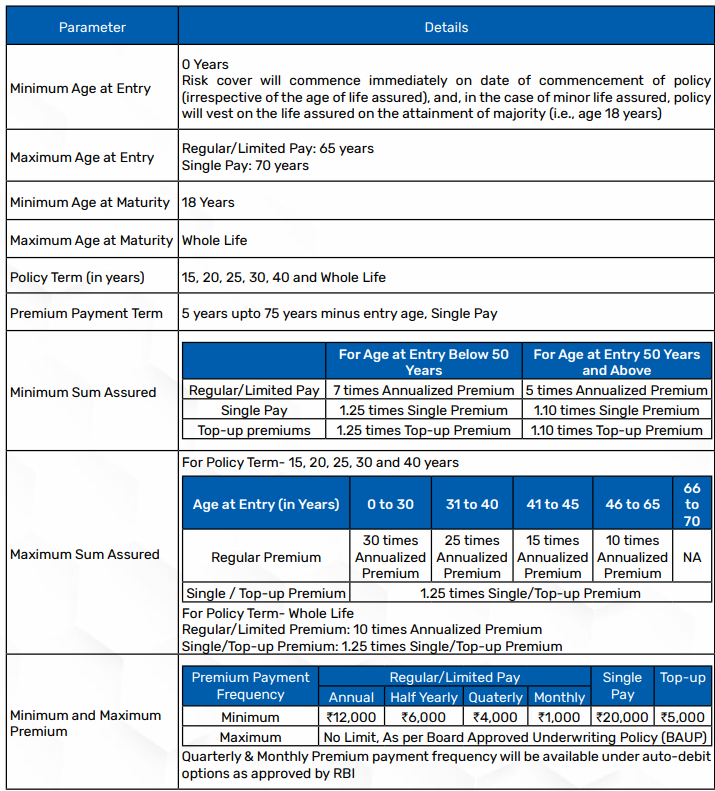
Who is eligible for the Bajaj Life Supreme Gold?
What are the benefits of the Bajaj Life Supreme Gold?
1. Maturity Benefit
Fund Value shall be payable to you on the Maturity Date, provided the life assured (person whose life is covered under the policy) is alive.
You will have an option to receive the Maturity Benefit as a lump sum or as a systematic payout for a maximum of five years under the Settlement Option.
2. Death Benefit
In case of unfortunate death of the Life Assured during the Bajaj Life Supreme Gold Plan Policy term, provided all due premiums have been paid, and the policy is in force, the Death Benefit payable will be the higher of:
- Prevailing Sum Assured, including top-up sum assured, if any
- Fund Value as available on date of intimation of death
- Guaranteed Death Benefit i.e.105% of Total Premiums Paid till the date of death, including top-up premium
The Bajaj Life Supreme Gold Plan policy will terminate on the date of intimation of death of the life assured. Benefits available under the Plan
3. Additions to the Fund
Loyalty Additions
At the end of every year from the 16th policy year till the end of the policy term, additional units will be added to your fund value as Loyalty Additions
Return of Mortality Charge (ROMC)
Life cover charges deducted during the Bajaj Life Supreme Gold Plan policy term shall be added back to your fund value
What are the investment strategies and fund options of the Bajaj Life Supreme Gold?
A. Investor-selectable Portfolio Strategy:
If you want to allocate your Premiums based on your personal choice and decision, you can opt for this Investment Strategy and choose from among the Funds below to suit your investment needs.
| Asset Allocation | |||||
| S no | Fund Name | Equity | Debt | Money Market | Risk profile |
| 1 | Nifty 500 Low Volatility 50 Index Fund | 65% – 100% | 0% – 35% | 0% – 35% | Very High |
| 2 | Opportunities Fund | 65% – 100% | 0% – 35% | 0% – 35% | Very High |
| 3 | BSE 500 Quality 50 Index Fund3 | 65% – 100% | 0% – 35% | 0% – 35% | Very High |
| 4 | BSE 500 Dividend Leaders 50 Index Fund | 65% – 100% | 0% – 35% | 0% – 35% | Very High |
| 5 | India Consumption Fund | 65% – 100% | 0% – 35% | 0% – 35% | Very High |
| 6 | Pure Stock Innovation | 65% – 100% | 0% – 35% | 0% – 35% | Very High |
| 7 | BSE 500 Enhanced Value 50 Index Fund3 | 65% – 100% | 0% – 35% | 0% – 35% | Very High |
| 8 | Equity Growth Fund II | Not less than 60% | 0% – 40% | 0% – 40% | Very High |
| 9 | Accelerator Mid-Cap Fund II | Not less than 60% (at least 50% in Mid cap) | 0% – 40% | 0% – 40% | Very High |
| 10 | Pure Stock Fund | Not less than 60% | 0% – 40% | 0% – 40% | Very High |
| 11 | Pure Stock Fund II | Not less than 75% | — | 0% -25% | Very High |
| 12 | Flexi Cap Fund | 65% – 100% | 0% – 35% | 0% – 35% | Very High |
| 13 | Sustainable Equity Fund | 65% – 100% | 0% – 35% | 0% – 35% | Very High |
| 14 | Small Cap Fund | 65% – 100% | 0% – 35% | 0% – 35% | Very High |
| 15 | Midcap Index Fund | 65% – 100% | 0% – 35% | 0% – 35% | Very High |
| 16 | SmallCap Quality Index Fund | 65% – 100% | 0% – 35% | 0% – 35% | Very High |
| 17 | Nifty Alpha 50 Index Fund | 65% – 100% | 0% – 35% | 0% – 35% | Very High |
| 18 | Nifty 200 Alpha 30 Index Fund | 65% – 100% | 0% – 35% | 0% – 35% | Very High |
| 19 | Nifty 200 Momentum 30 Index Fund | 65% – 100% | 0% – 35% | 0% – 35% | Very High |
| 20 | Nifty 500 Multicap Momentum Quality 50 Index Fund | 65% – 100% | 0% – 35% | 0% – 35% | Very High |
| 21 | Focused 25 Fund | 65% – 100% | 0% – 35% | 0% – 35% | Very High |
| 22 | Nifty 500 Multifactor 50 Index Fund | 65% – 100% | 0% – 35% | 0% – 35% | Very High |
| 23 | Asset Allocation Fund II | 40% – 90% | 0% – 60% | 0% – 50% | High |
| 24 | Blue-chip Equity Fund | Not less than 60% | 0% – 40% | 0% – 40% | High |
| 25 | Dynamic Asset Allocation Fund | 10% 90% | 10% 90% | 0% – 80% | High |
| 26 | Bond Fund | — | 40% – 100% | 0% – 60% | Moderate |
| 27 | Individual Short-Term Debt Fund | — | 40% – 100% | 0% – 60% | Moderate |
| 28 | Debt Plus Fund | Not less than 80% | 0%-20% | 0%-20% | Moderate |
| 29 | Liquid Fund | — | — | 100% | Low |
B. Wheel of Life Portfolio Strategy – II:
In this Portfolio Strategy, at the commencement of the Bajaj Allianz Long-Life Goal III Plan Policy, the Regular/Limited Premium and the Top-up Premium, if any, would be allocated in the Funds mentioned (namely Equity Growth Fund II, Accelerator Mid-Cap Fund II, Bond Fund & Liquid Fund) in the proportion as mentioned in the table below, depending on the outstanding years to maturity.
| Proportion in Following Funds | |||||
| Years to Maturity | Equity Growth Fund II | Accelerator Mid-Cap Fund II | Bond Fund | Liquid Fund | Total |
| 10 & above | 40% | 45% | 15% | 0% | 100% |
| 9 | 35% | 50% | 15% | 0% | 100% |
| 8 | 30% | 55% | 15% | 0% | 100% |
| 7 | 25% | 60% | 15% | 0% | 100% |
| 6 | 25% | 60% | 15% | 0% | 100% |
| 5 | 20% | 65% | 15% | 0% | 100% |
| 4 | 20% | 55% | 15% | 10% | 100% |
| 3 | 20% | 50% | 15% | 15% | 100% |
| 2 | 10% | 30% | 30% | 30% | 100% |
| 1 | 0% | 0% | 35% | 65% | 100% |
C. Trigger-Based Portfolio Strategy:
Under this Portfolio Strategy, Regular/Limited Premiums and Top-up Premiums, if any, will be allocated between two Funds, Equity Growth Fund II (an equity-oriented Fund) and Bond Fund (a debt-oriented Fund), in a 75%: 25% proportion.
The Fund value proportions may subsequently get altered due to market movements.
Any appreciation over three times the value of units is considered a gain and is switched to the Liquid Fund. Later, it will be switched to the Equity Growth Fund II and the Bond Fund such that, after the transfer, the ratio of the value of units in the Equity Growth Fund II to that in the Bond Fund is restored to 75%:25%.
D. Auto Transfer Portfolio Strategy:
This strategy helps you to invest your money systematically by automatically transferring your money every month, from a low-risk Fund to the Fund(s) of your choice.
In this Portfolio Strategy, your Premium will be allocated to the Bond Fund and/or Liquid Fund, as specified by you.
At the start of each monthly anniversary of the Bajaj Allianz Long-Life Goal III Plan Policy, a proportion (as mentioned below) of the Fund value in the Bond Fund and/or Liquid Fund as on that date will be switched to the other Fund/s (available in the plan) as specified by you.
The proportion of Fund value = 1/ Outstanding no. of months till the next premium due date.
E. Capital Preservation – Orientation Strategy
You can opt for this strategy at the inception of the Policy if the Bajaj Life Supreme Gold Plan Policy term is at least 10 years, and the minimum difference between the Policy term and Premium payment term is at least 5 years.
The objective of the strategy is to optimise risk and return by investing across five predetermined Funds, which are a mix of very high to low-risk Funds, in such a way that the monies invested over the years, along with the accumulated returns, are subjected to lesser market volatility in the years closer to maturity.
At each policy anniversary, the Company will reallocate the Fund Value among various funds in the proportion based on the table below, depending on the outstanding years to maturity.
| Proportion in the Following Funds | ||||||
| Years to Maturity | Equity Growth Fund II | Accelerator Mid-Cap Fund II | Pure-Stock Fund II | Bond Fund | Liquid Fund | Total |
| 10 & above | 40% | 15% | 15% | 30% | 0% | 100% |
| 9 | 35% | 15% | 15% | 35% | 0% | 100% |
| 8 | 30% | 15% | 15% | 40% | 0% | 100% |
| 7 | 30% | 15% | 15% | 40% | 0% | 100% |
| 6 | 30% | 10% | 15% | 45% | 0% | 100% |
| 5 | 25% | 10% | 15% | 40% | 10% | 100% |
| 4 | 20% | 5% | 10% | 40% | 25% | 100% |
| 3 | 15% | 0% | 5% | 40% | 40% | 100% |
| 2 | 0% | 0% | 0% | 40% | 60% | 100% |
| 1 | 0% | 0% | 0% | 0% | 100% | 100% |
What are the charges of the Bajaj Life Supreme Gold?
i. Premium Allocation Charge
For Limited/Regular/Single Pay – Nil.
For Top-up premium – 2% of Top-up premium
ii. Policy Administration Charge
| Mode | As % of Annualized/Single Premium | ||
| 1st to 5th Year | 6th Year to 20th Year | 21st Year onwards | |
| Regular/Limited Pay | 0.09% | 0.20% | Nil |
| Single Pay | 0.05% | Nil | |
iii. Fund Management Charge
| Fund | Fund Management Charge per annum |
| Nifty 500 Low Volatility 50 Index Fund | 1.35% |
| Opportunities Fund | 1.35% |
| BSE 500 Quality 50 Index Fund | 1.35% |
| BSE 500 Dividend Leaders 50 Index Fund | 1.35% |
| India Consumption Fund | 1.35% |
| Pure Stock Innovation Fund | 1.35% |
| BSE 500 Enhanced Value 50 Index Fund | 1.35% |
| Equity Growth Fund II | 1.35% |
| Accelerator Mid Cap Fund II | 1.35% |
| Pure Stock Fund | 1.35% |
| Flexi Cap Fund | 1.35% |
| Sustainable Equity Fund | 1.35% |
| Dynamic Asset Allocation Fund | 1.35% |
| Small Cap Fund | 1.35% |
| Midcap Index Fund | 1.35% |
| SmallCap Quality Index Fund | 1.35% |
| Nifty Alpha 50 Index Fund | 1.35% |
| Nifty 200 Alpha 30 Index Fund | 1.35% |
| Nifty 200 Momentum 30 Index Fund | 1.35% |
| Nifty 500 Multicap Momentum Quality 50 Index Fund | 1.35% |
| Nifty 500 Multifactor 50 Index Fund | 1.35% |
| Focused 25 Fund | 1.35% |
| Pure Stock Fund II | 1.30% |
| Asset Allocation Fund II | 1.25% |
| Bluechip Equity Fund | 1.25% |
| Liquid Fund | 0.95% |
| Bond Fund | 0.95% |
| Individual Short Term Debt Fund | 0.95% |
| Debt Plus Fund | 0.70% |
| Discontinued Life Policy Fund | 0.50% |
iv. Mortality Charge
Mortality Charge is the cost of the life insurance cover, which depends on your age, gender, chosen sum assured and Board Approved Underwriting Policy (BAUP).
Mortality Charge will be deducted at each monthly anniversary by cancellation of units at the prevailing unit price.
v. Miscellaneous Charge
The miscellaneous charge will be charged at the rate of ₹100/- per transaction (as mentioned in the respective section). This charge will be deducted upon cancellation of Units.
vi. Discontinuance / Surrender Charge
Under a Regular/Limited Premium Policy, the Discontinuance Charge shall be applicable to the Regular Premium Fund Value based on the year of discontinuance and premium amount.
Inference from the charges: ULIPs often include costs that are not found in other market-linked investments, such as discontinuance fees and policy administration charges. These expenses act as overheads for investors and can significantly impact returns over time, reducing the overall profitability of your investment.
Grace Period, Discontinuance and Revival of the Bajaj Life Supreme Gold
Grace Period
The grace period for payment of premium is 15 days for monthly mode of premium payment and 30 days for other modes of premium payment commencing from the premium due date.
Discontinuance
On Discontinuance of Regular/limited Premiums due during the first five Policy years, the Bajaj Life Supreme Gold Plan Policy will be converted to a Discontinued Life Policy.
The Regular Premium Fund value less the Discontinuance/Surrender charge, along with the Top-up Premium Fund value, will be transferred to the Discontinued Life Policy Fund.
You can receive the Discontinued value (as Surrender Value) at the end of the lock-in period of five Policy years or the date of surrender, whichever is later.
On discontinuance of the due Regular/limited Premiums after the lock-in period of five Policy years, the Policy will be, immediately & automatically, converted to a Paid-up Policy, with risk cover under the base Policy reduced to the extent of the Paid-up Sum Assured and without any Loyalty Additions, Guaranteed Wealth Booster, ROMC or Rider cover.
Revival
A Discontinued Policy can only be revived within three (3) years from the date of first unpaid premium.
Free Look for the Bajaj Life Supreme Gold
You have a free look period of 30 days beginning from the date of receipt of the policy document, whether received electronically or otherwise, to review the terms and conditions of such policy, except for those policies with tenure of less than a year. In the event you disagree with any of the policy terms or conditions, or otherwise and have not made any claim, you shall have the option to return the policy to the insurer for cancellation
Surrendering the Bajaj Life Supreme Gold
On Surrender during the lock-in period of 5 years, the Fund Value, after deducting the applicable discontinuance/surrender charge, if any, as on the date of surrender, will be transferred to the Discontinued Life Policy Fund, and all risk and rider cover shall cease immediately.
The discontinuance value as at the end of the lock-in period will be available to you as surrender benefit.
The fund management charges of the Discontinued Life Policy Fund will be applicable during this period, and no other charges will be applied.
On Surrender after the lock-in period of 5 years, the Fund Value, as on the date of surrender, will be paid as Surrender Value. The Policy shall terminate upon payment of the full surrender value.
What are the advantages of the Bajaj Life Supreme Gold?
- Partial Withdrawal: Allows policyholders to access a portion of the accumulated fund value to meet immediate financial requirements, subject to applicable conditions.
- Systematic Partial Withdrawal: Provides the option to withdraw a predetermined percentage of the fund value at regular intervals, offering structured liquidity from the policy.
- Top-up Premiums: Allows policyholders to invest additional amounts through Top-up premiums, subject to the terms and conditions of the policy.
- Fund Switching: Under the Investor Selectable Portfolio Strategy, policyholders can switch between available funds to modify their investment allocation.
- Change in Premium Paying Term: The Premium Paying Term (PPT) can be changed after completion of the first five policy years, subject to the applicable terms.
- Reduction in Premium: Regular or limited premiums can be reduced after completion of five policy years, subject to the policy conditions.
- Change in Policy Features: Policyholders may have the option to reduce the Sum Assured, increase the policy term, or change the premium payment frequency, as permitted under the plan.
- Maturity Benefit in Instalments: The maturity benefit can be received in instalments under the Settlement Option instead of as a single lump-sum payment, subject to the applicable terms.
What are the disadvantages of the Bajaj Life Supreme Gold?
- No Policy Loan: The plan does not provide a policy loan facility, limiting access to the policy’s value during financial emergencies.
- Five-Year Lock-in: The policy has a five-year lock-in period, during which withdrawals or exit options are restricted as per the policy terms.
- Only Net Premium Is Invested: The premium is subject to applicable charges before being allocated to the investment funds. Therefore, the entire premium does not get invested from the outset.
- Insufficient Life Cover: The life cover offered may not be adequate to meet the policyholder’s actual protection needs. In addition, a Whole Life cover may not be necessary for most financial planning requirements.
- Delayed Return of Charges: Although certain charges are returned to the policy corpus at a later stage, the amount remains unavailable for investment during the intervening period. As a result, the potential for compounding on those amounts is lost.
Research Methodology of Bajaj Life Supreme Gold
The primary objective of investing in a market-linked product is to build wealth over the long term.
To evaluate whether the Bajaj Life Supreme Gold Plan serves this purpose, let us examine its Internal Rate of Return (IRR) based on the benefit illustration provided in the policy brochure.
Benefit Illustration – IRR Analysis of Bajaj Life Supreme Gold
Consider a 40-year-old male opting for the Bajaj Life Supreme Gold Plan with a sum assured of ₹50,00,000. The annual premium is ₹5,00,000, payable for 10 years, with a policy term of 60 years.
| Male | 40 years |
| Sum Assured | ₹ 50,00,000 |
| Policy Term | 60 years |
| Premium Paying Term | 10 years |
| Annualised Premium | ₹ 5,00,000 |
The illustration considers two assumed rates of return—4% p.a. and 8% p.a. These rates are used only for illustration and are not guaranteed.
Actual fund performance may differ depending on market conditions and investment performance.
| At 4% p.a. | At 8% p.a. | ||||
| Age | Year | Annualised premium / Maturity benefit | Death benefit | Annualised premium / Maturity benefit | Death benefit |
| 40 | 1 | -5,00,000 | 50,00,000 | -5,00,000 | 50,00,000 |
| 41 | 2 | -5,00,000 | 50,00,000 | -5,00,000 | 50,00,000 |
| 42 | 3 | -5,00,000 | 50,00,000 | -5,00,000 | 50,00,000 |
| 43 | 4 | -5,00,000 | 50,00,000 | -5,00,000 | 50,00,000 |
| 44 | 5 | -5,00,000 | 50,00,000 | -5,00,000 | 50,00,000 |
| 45 | 6 | -5,00,000 | 50,00,000 | -5,00,000 | 50,00,000 |
| 46 | 7 | -5,00,000 | 50,00,000 | -5,00,000 | 50,00,000 |
| 47 | 8 | -5,00,000 | 50,00,000 | -5,00,000 | 50,00,000 |
| 48 | 9 | -5,00,000 | 50,00,000 | -5,00,000 | 50,00,000 |
| 49 | 10 | -5,00,000 | 50,00,000 | -5,00,000 | 50,00,000 |
| 50 | 11 | 0 | 50,00,000 | 0 | 50,00,000 |
| 51 | 12 | 0 | 50,00,000 | 0 | 50,00,000 |
| 52 | 13 | 0 | 50,00,000 | 0 | 50,00,000 |
| 53 | 14 | 0 | 50,00,000 | 0 | 50,00,000 |
| 54 | 15 | 0 | 50,00,000 | 0 | 50,00,000 |
| 55 | 16 | 0 | 50,00,000 | 0 | 50,00,000 |
| 56 | 17 | 0 | 50,00,000 | 0 | 50,00,000 |
| 57 | 18 | 0 | 50,00,000 | 0 | 50,00,000 |
| 58 | 19 | 0 | 50,00,000 | 0 | 50,00,000 |
| 59 | 20 | 0 | 50,00,000 | 0 | 50,00,000 |
| 60 | 21 | 0 | 50,00,000 | 0 | 50,00,000 |
| 61 | 22 | 0 | 50,00,000 | 0 | 50,00,000 |
| 62 | 23 | 0 | 50,00,000 | 0 | 50,00,000 |
| 63 | 24 | 0 | 50,00,000 | 0 | 50,00,000 |
| 64 | 25 | 0 | 50,00,000 | 0 | 50,00,000 |
| 65 | 26 | 0 | 50,00,000 | 0 | 50,00,000 |
| 66 | 27 | 0 | 50,00,000 | 0 | 50,00,000 |
| 67 | 28 | 0 | 50,00,000 | 0 | 50,00,000 |
| 68 | 29 | 0 | 50,00,000 | 0 | 50,00,000 |
| 69 | 30 | 0 | 50,00,000 | 0 | 50,00,000 |
| 70 | 31 | 0 | 50,00,000 | 0 | 50,00,000 |
| 71 | 32 | 0 | 50,00,000 | 0 | 50,00,000 |
| 72 | 33 | 0 | 50,00,000 | 0 | 50,00,000 |
| 73 | 34 | 0 | 50,00,000 | 0 | 50,00,000 |
| 74 | 35 | 0 | 50,00,000 | 0 | 50,00,000 |
| 75 | 36 | 0 | 50,00,000 | 0 | 50,00,000 |
| 76 | 37 | 0 | 50,00,000 | 0 | 50,00,000 |
| 77 | 38 | 0 | 50,00,000 | 0 | 50,00,000 |
| 78 | 39 | 0 | 50,00,000 | 0 | 50,00,000 |
| 79 | 40 | 0 | 50,00,000 | 0 | 50,00,000 |
| 80 | 41 | 0 | 50,00,000 | 0 | 50,00,000 |
| 81 | 42 | 0 | 50,00,000 | 0 | 50,00,000 |
| 82 | 43 | 0 | 50,00,000 | 0 | 50,00,000 |
| 83 | 44 | 0 | 50,00,000 | 0 | 50,00,000 |
| 84 | 45 | 0 | 50,00,000 | 0 | 50,00,000 |
| 85 | 46 | 0 | 50,00,000 | 0 | 50,00,000 |
| 86 | 47 | 0 | 50,00,000 | 0 | 50,00,000 |
| 87 | 48 | 0 | 50,00,000 | 0 | 50,00,000 |
| 88 | 49 | 0 | 50,00,000 | 0 | 50,00,000 |
| 89 | 50 | 0 | 50,00,000 | 0 | 50,00,000 |
| 90 | 51 | 0 | 50,00,000 | 0 | 50,00,000 |
| 91 | 52 | 0 | 50,00,000 | 0 | 50,00,000 |
| 92 | 53 | 0 | 50,00,000 | 0 | 50,00,000 |
| 93 | 54 | 0 | 50,00,000 | 0 | 50,00,000 |
| 94 | 55 | 0 | 50,00,000 | 0 | 50,00,000 |
| 95 | 56 | 0 | 50,00,000 | 0 | 50,00,000 |
| 96 | 57 | 0 | 50,00,000 | 0 | 50,00,000 |
| 97 | 58 | 0 | 50,00,000 | 0 | 50,00,000 |
| 98 | 59 | 0 | 50,00,000 | 0 | 50,00,000 |
| 99 | 60 | 0 | 50,00,000 | 0 | 50,00,000 |
| 2,33,83,968 | 19,17,27,266 | ||||
| IRR | 2.81% | 6.76% | |||
Maturity Benefit at the End of 60 Years:
- At 4% assumed return: Fund value of ₹2.33 crore; IRR of 2.81% as per the Bajaj Life Supreme Gold Plan maturity calculator.
- At 8% assumed return: Fund value of ₹19.17 crore; IRR of 6.76% as per the Bajaj Life Supreme Gold Plan maturity calculator.
Even at the higher assumed return of 8%, the IRR remains modest for a market-linked product, particularly considering the equity-market exposure and long investment horizon involved. The difference between the assumed fund return and the investor’s actual IRR also highlights the impact of charges and other policy costs.
This raises an important question about the role of the product in long-term wealth creation.
When a market-linked product delivers a relatively low investor-level return after costs, it can reduce the potential for inflation-adjusted wealth creation and may affect the ability to accumulate the required corpus for future financial goals.
Bajaj Life Supreme Gold Vs. Other Investments
The return analysis highlights a key concern with the Bajaj Life Supreme Gold Plan: the illustrated returns may not adequately support long-term, inflation-adjusted wealth creation.
For an investment horizon of 30–40 years, even a modest difference in annualised returns can have a substantial impact on the final corpus.
Investors therefore need to consider whether the potential returns justify the costs, risks, and long-term commitment associated with the plan.
Bajaj Life Supreme Gold Vs. Pure-term + Equity Mutual Fund
Let us compare this with a strategy that separates insurance and investment, using the same annual premium of ₹5,00,000 from our earlier example.
A pure term insurance policy offering a sum assured of ₹50 lakh costs approximately ₹26,700 per year for a 40-year-old, based on a 30-year policy term with a 10-year premium-paying period.
This leaves ₹4,73,300 per year available for investment.
| Pure Term Life Insurance Policy | |
| Sum Assured | ₹ 50,00,000 |
| Policy Term | 30 years |
| Premium Paying Term | 10 years |
| Annualised Premium | ₹ 26,700 |
| Investment | ₹ 4,73,300 |
Investors seeking relatively lower-risk options could consider instruments such as the Public Provident Fund (PPF), subject to prevailing rules and limits.
Those comfortable with market volatility and a long investment horizon could consider equity mutual funds.
| Term insurance + Equity Mutual Fund | |||
| Age | Year | Term Insurance premium + Equity Mutual Fund | Death benefit |
| 40 | 1 | -5,00,000 | 50,00,000 |
| 41 | 2 | -5,00,000 | 50,00,000 |
| 42 | 3 | -5,00,000 | 50,00,000 |
| 43 | 4 | -5,00,000 | 50,00,000 |
| 44 | 5 | -5,00,000 | 50,00,000 |
| 45 | 6 | -5,00,000 | 50,00,000 |
| 46 | 7 | -5,00,000 | 50,00,000 |
| 47 | 8 | -5,00,000 | 50,00,000 |
| 48 | 9 | -5,00,000 | 50,00,000 |
| 49 | 10 | -5,00,000 | 50,00,000 |
| 50 | 11 | 0 | 50,00,000 |
| 51 | 12 | 0 | 50,00,000 |
| 52 | 13 | 0 | 50,00,000 |
| 53 | 14 | 0 | 50,00,000 |
| 54 | 15 | 0 | 50,00,000 |
| 55 | 16 | 0 | 50,00,000 |
| 56 | 17 | 0 | 50,00,000 |
| 57 | 18 | 0 | 50,00,000 |
| 58 | 19 | 0 | 50,00,000 |
| 59 | 20 | 0 | 50,00,000 |
| 60 | 21 | 0 | 50,00,000 |
| 61 | 22 | 0 | 50,00,000 |
| 62 | 23 | 0 | 50,00,000 |
| 63 | 24 | 0 | 50,00,000 |
| 64 | 25 | 0 | 50,00,000 |
| 65 | 26 | 0 | 50,00,000 |
| 66 | 27 | 0 | 50,00,000 |
| 67 | 28 | 0 | 50,00,000 |
| 68 | 29 | 0 | 50,00,000 |
| 69 | 30 | 0 | 50,00,000 |
| 70 | 31 | 0 | 50,00,000 |
| 71 | 32 | 0 | 50,00,000 |
| 72 | 33 | 0 | 50,00,000 |
| 73 | 34 | 0 | 50,00,000 |
| 74 | 35 | 0 | 50,00,000 |
| 75 | 36 | 0 | 50,00,000 |
| 76 | 37 | 0 | 50,00,000 |
| 77 | 38 | 0 | 50,00,000 |
| 78 | 39 | 0 | 50,00,000 |
| 79 | 40 | 0 | 50,00,000 |
| 80 | 41 | 0 | 50,00,000 |
| 81 | 42 | 0 | 50,00,000 |
| 82 | 43 | 0 | 50,00,000 |
| 83 | 44 | 0 | 50,00,000 |
| 84 | 45 | 0 | 50,00,000 |
| 85 | 46 | 0 | 50,00,000 |
| 86 | 47 | 0 | 50,00,000 |
| 87 | 48 | 0 | 50,00,000 |
| 88 | 49 | 0 | 50,00,000 |
| 89 | 50 | 0 | 50,00,000 |
| 90 | 51 | 0 | 50,00,000 |
| 91 | 52 | 0 | 50,00,000 |
| 92 | 53 | 0 | 50,00,000 |
| 93 | 54 | 0 | 50,00,000 |
| 94 | 55 | 0 | 50,00,000 |
| 95 | 56 | 0 | 50,00,000 |
| 96 | 57 | 0 | 50,00,000 |
| 97 | 58 | 0 | 50,00,000 |
| 98 | 59 | 0 | 50,00,000 |
| 99 | 60 | 0 | 50,00,000 |
| 2,35,29,98,369 | |||
| IRR | 11.63% | ||
If ₹4,73,300 is invested annually in an equity mutual fund and the assumed returns materialise, the projected corpus could reach approximately ₹268 crore.
After accounting for long-term capital gains tax, the post-tax corpus is estimated at around ₹235 crore, corresponding to a post-tax IRR of approximately 11.63%.
| Equity Mutual Fund Tax Calculation | |
| Maturity value after 60 years | 2,68,84,46,994 |
| Purchase price | 47,33,000 |
| Long-Term Capital Gains | 2,68,37,13,994 |
| Exemption limit | 1,25,000 |
| Taxable LTCG | 2,68,35,88,994 |
| Tax paid on LTCG | 33,54,48,624 |
| Maturity value after tax | 2,35,29,98,369 |
This comparison illustrates the potential benefit of separating the two objectives: use term insurance primarily for life protection and choose investments based on your goals, time horizon, and risk capacity.
This approach can provide greater transparency, liquidity, and flexibility, while allowing the investment component to be evaluated independently of the insurance costs.
The comparison does not guarantee that the alternative investment will achieve the projected returns. Actual mutual fund returns, taxation, insurance premiums, and applicable rules may vary.
The key consideration is whether the structure of the Bajaj Life Supreme Gold Plan provides sufficient value for the costs and long-term commitment involved.
Final Verdict on the Bajaj Life Supreme Gold
Under the Bajaj Life Supreme Gold Plan, premiums are paid for a limited period, while the fund value is received at the end of the policy term.
However, only the net premium—after applicable charges—is invested. Over the long term, these charges can significantly affect the growth of the investment.
Despite being market-linked, the illustrated returns may not adequately compensate for the risks and costs involved and it also has a high agent commission.
The plan also raises concerns around the level of life cover and liquidity. With a relatively low sum assured compared with the premium commitment and a long policy horizon, the product may not effectively address either protection or wealth-creation needs.
The combination of charges, long-term lock-in, and modest illustrated returns can limit its effectiveness as a wealth-building solution.
The fundamental concern is the combination of insurance and investment within a single product. This can make it difficult to optimise either objective independently.
An alternative approach is to use a pure-term insurance plan for adequate life protection and invest the remaining funds through a diversified portfolio aligned with your financial goals.
Investment decisions should be based on three key factors: risk appetite, investment horizon, and financial objectives.
Aligning these factors can help create a portfolio that is better suited to your specific needs.
Do Quora, Facebook, and Twitter have the final say when it comes to financial advice?
If you need assistance, a qualified financial advisor can help you evaluate the options and develop a customised financial plan.


Leave a Reply