


 Listen to this article
Are we truly in control of our finances, or are we letting convenience dictate our choices?
How often do we pause to ask if the latest gadget, vacation, or luxury treat is a need—or just a want we can’t resist?
In a world where borrowing is seamless and EMIs are normalized, have we started trading long-term freedom for short-term gratification?
This article explores how lifestyle borrowing is reshaping financial futures and asks whether we can enjoy life without letting debt define it.
Table of Contents:
- When Debt Was a Warning, Not a Convenience
- The Shift from Need-Based Borrowing to Lifestyle Debt
- Instant Gratification: Why Waiting Feels Uncomfortable Today
- Social Media and the Pressure to “Keep Up”
- The Hidden Cost of Lifestyle EMIs
- How Debt Steals Tomorrow’s Freedom
- Can You Enjoy Life Without Borrowing?
- Choosing Between Financial Freedom and Financial Fatigue
1. When Debt Was a Warning, Not a Convenience
Not too long ago, debt was serious business.
Borrowing money was reserved for necessities—emergencies, education, or buying a home.
Every loan carried responsibility, and repayment was treated as a top priority.
Debt was uncomfortable but respected. People avoided it unless absolutely necessary.
Fast forward to today, and the mind-set has shifted.
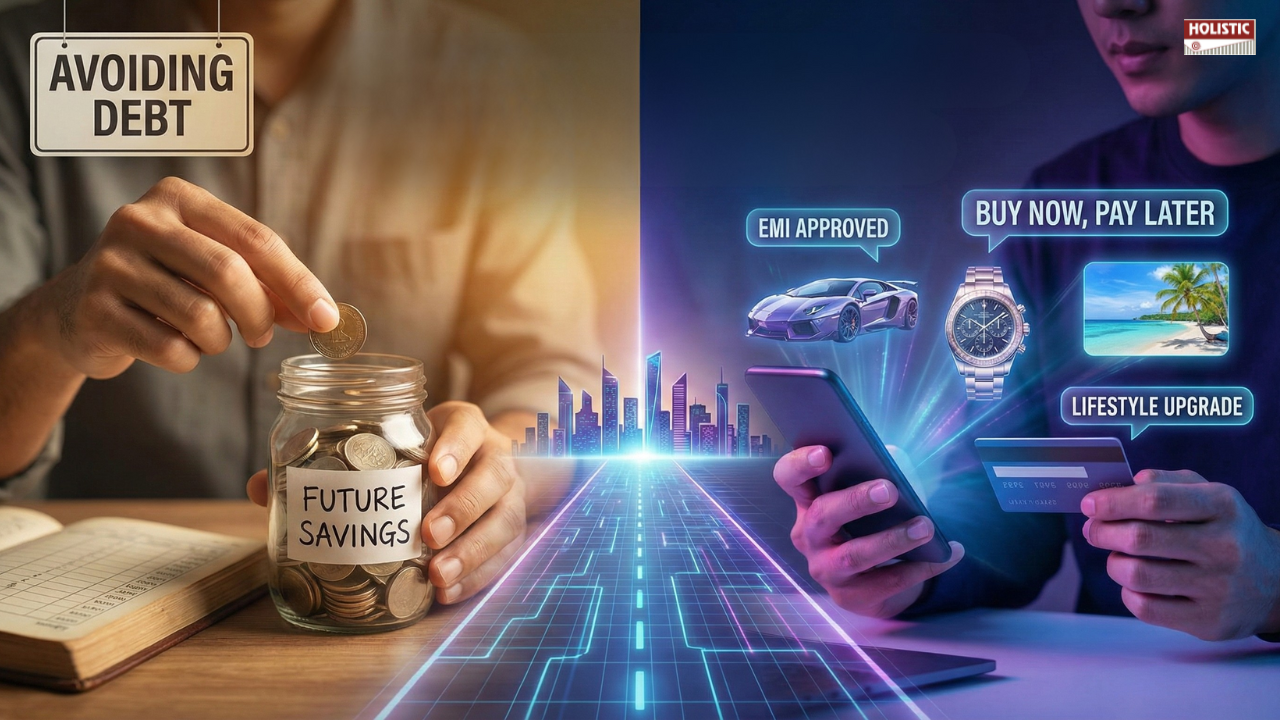
Debt is no longer a warning; it’s marketed as a lifestyle tool.
Banks, fintech apps, and e-commerce platforms make borrowing seamless, often positioning it as a “smart” choice rather than a financial compromise.
The result? Borrowing has gone from cautious to convenient.
2. The Shift from Need-Based Borrowing to Lifestyle Debt
For today’s young earners, financial decisions often begin with loans instead of savings.
Credit cards, personal loans, and “Buy Now, Pay Later” options encourage upgrading lifestyles overnight:
- A new phone? EMI.
- A vacation? EMI.
- A shopping spree? EMI.
The danger isn’t borrowing itself—it’s borrowing for wants instead of needs.
Lifestyle debt slowly erodes financial discipline, creating a default mind-set where money is borrowed for comfort rather than managed responsibly.
3. Instant Gratification: Why Waiting Feels Uncomfortable Today
Our world is designed for speed. Instant approvals, one-click shopping, and same-day delivery have made patience feel outdated.
The inner dialogue often goes:
“Why wait when I’m earning now?”
“I’ll manage the EMIs somehow.”
But “somehow” rarely has a plan.
The real impact of lifestyle debt appears later—when responsibilities increase, income fluctuates, or emergencies arise.
That’s when financial pressure becomes real.
4. Social Media and the Pressure to “Keep Up”
Social media has turned personal finance into a performance.
Every vacation, gadget, or café visit is visible, compared, and judged.
Earlier generations competed over long-term assets like homes or businesses.
Today, competition exists in everyday consumption.
The catch? You rarely see the EMIs behind Instagram posts.
A weekend trip may feel like joy, but repayment can drag on for months.
What looks like happiness is often borrowed?
5. The Hidden Cost of Lifestyle EMIs
Lifestyle debt doesn’t feel dangerous because monthly instalments are small.
But multiple EMIs accumulate silently.
Consequences include:
- Reduced savings
- No emergency buffer
- Weak investment habits
- Constant stress about monthly cash flow
Eventually, debt starts dictating life choices—from career decisions to family planning—turning convenience into constraint.
6. How Debt Steals Tomorrow’s Freedom
Every EMI today is money already claimed from your future income.
This reduces flexibility for tomorrow:
- Want to switch jobs or start a business?
- Need a break during personal crises?
Debt shifts focus from building freedom to servicing past spending.
Instead of working for your goals, you’re working to pay for temporary pleasures.
7. Can You Enjoy Life Without Borrowing?
Absolutely. Enjoyment doesn’t vanish—it just needs structure.
Financial confidence comes from:
- Spending within your means
- Saving before spending
- Investing consistently
- Celebrating life without months of repayment stress
True happiness feels lighter when it’s earned, not borrowed.
8. Choosing Between Financial Freedom and Financial Fatigue
Every generation faces a choice:
- A life of constant EMIs, stress, and limited options
- A life built on savings, investments, and control
The difference isn’t income—it’s mind-set.
A Certified Financial Planner (CFP) can help design a financial strategy that balances enjoyment today with security tomorrow.
By structuring spending, savings, and debt decisions, you can live comfortably now without compromising your future freedom.
The key takeaway: Borrowing for lifestyle is tempting, but true financial wellness comes from control, discipline, and foresight.
The choices you make today shape your freedom tomorrow.


Leave a Reply